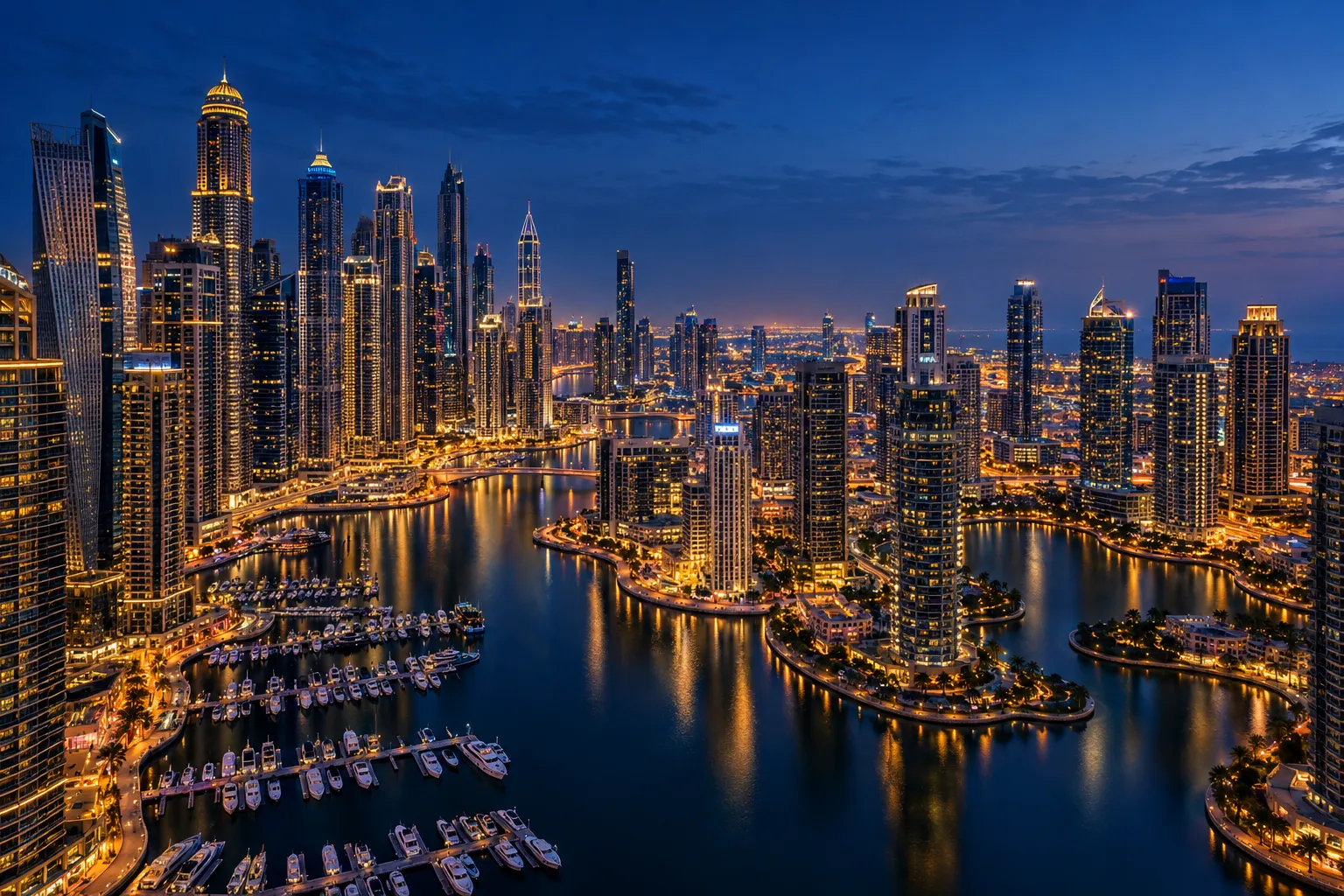
Zenith Group began in Dubai, and Zenith Multi Trading DMCC, now the group's Dubai investment company, has been based in the city since 2014. We are often asked why so many commodity businesses choose Dubai as their base. The answer combines old geography with very modern policy.
A city between markets
Dubai sits within a few hours' flight of a large share of the world's population. Its time zone overlaps with Asian mornings and European afternoons, so a trader can speak to suppliers in Africa, buyers in India and financiers in London in the same working day. For a business that lives on relationships and timing, that is a real advantage.
Infrastructure built for trade
Jebel Ali, one of the largest container ports in the world, and Dubai's international airports connect the city to hundreds of destinations. Physical goods, documents and people all move efficiently. Commodity trading is ultimately about getting the right material to the right place at the right time, and Dubai has invested heavily in making that easier.
The DMCC ecosystem
The Dubai Multi Commodities Centre (DMCC) free zone was created to make Dubai a centre for commodity trade. It hosts thousands of member companies across metals, precious stones, agricultural products, energy and services. Members benefit from a clear regulatory framework, company ownership rules that suit international businesses, and a community of traders, financiers, inspectors and logistics providers all within reach.
That ecosystem matters. A trade involves more than a buyer and a seller: it needs banks, insurers, surveyors, warehouses and shipping agents. Having them close together lowers costs and speeds up decisions.
Policy stability and openness
The UAE has pursued an open, trade-friendly policy for decades, including a growing network of comprehensive economic partnership agreements with major trading nations. For international businesses, predictability is often worth more than any single incentive.
Trade finance and services close at hand
Commodity trading runs on finance. Letters of credit, pre-shipment finance, hedging and insurance all need banks and specialists who understand the physical business. Dubai has attracted a deep pool of international and regional banks, trade finance houses, insurers and legal advisers. A trader can structure, finance, insure and document a shipment without leaving the city, which shortens the time between an opportunity and a signed contract.
A gateway to growth markets
Many of the world's fastest-growing economies, in South Asia, Africa and Central Asia, are closer to Dubai than to traditional trading centres such as London, Geneva or Singapore. Demand for metals, building materials and food in these markets is rising as populations grow and cities expand. Dubai gives traders a base that is close to that demand while still offering the legal certainty and connectivity of a global city.
What this means for Zenith
Zenith's own story began in Dubai's trading economy. Today the group is focused entirely on investment: Zenith Multi Trading DMCC is the group's Dubai investment company, and it no longer carries on a trading business. The same qualities that make Dubai a trading hub, connectivity, legal certainty and access to fast-growing markets, also make it an excellent base for long-term capital.
Dubai also anchors the wider group. Dubai is where Zenith started. Abu Dhabi, Mauritius and London followed, each chosen for its own strengths. You can read more about our global presence.
The road ahead
Commodity markets will keep changing. The energy transition is reshaping demand for metals and minerals, supply chains are diversifying, and digital tools are changing how trade is documented and financed. Hubs that adapt will keep their place. We believe Dubai's combination of location, infrastructure and policy gives it a strong chance of remaining one of them for decades to come.
Read next: Zenith Multi Trading DMCC → Dubai → The Group →